Shape / Tile-placement puzzle
Dorfromantik
Leave a little room for the river
A village grows one hexagon at a time. The most interesting patch of land is often the one you have yet to fill.
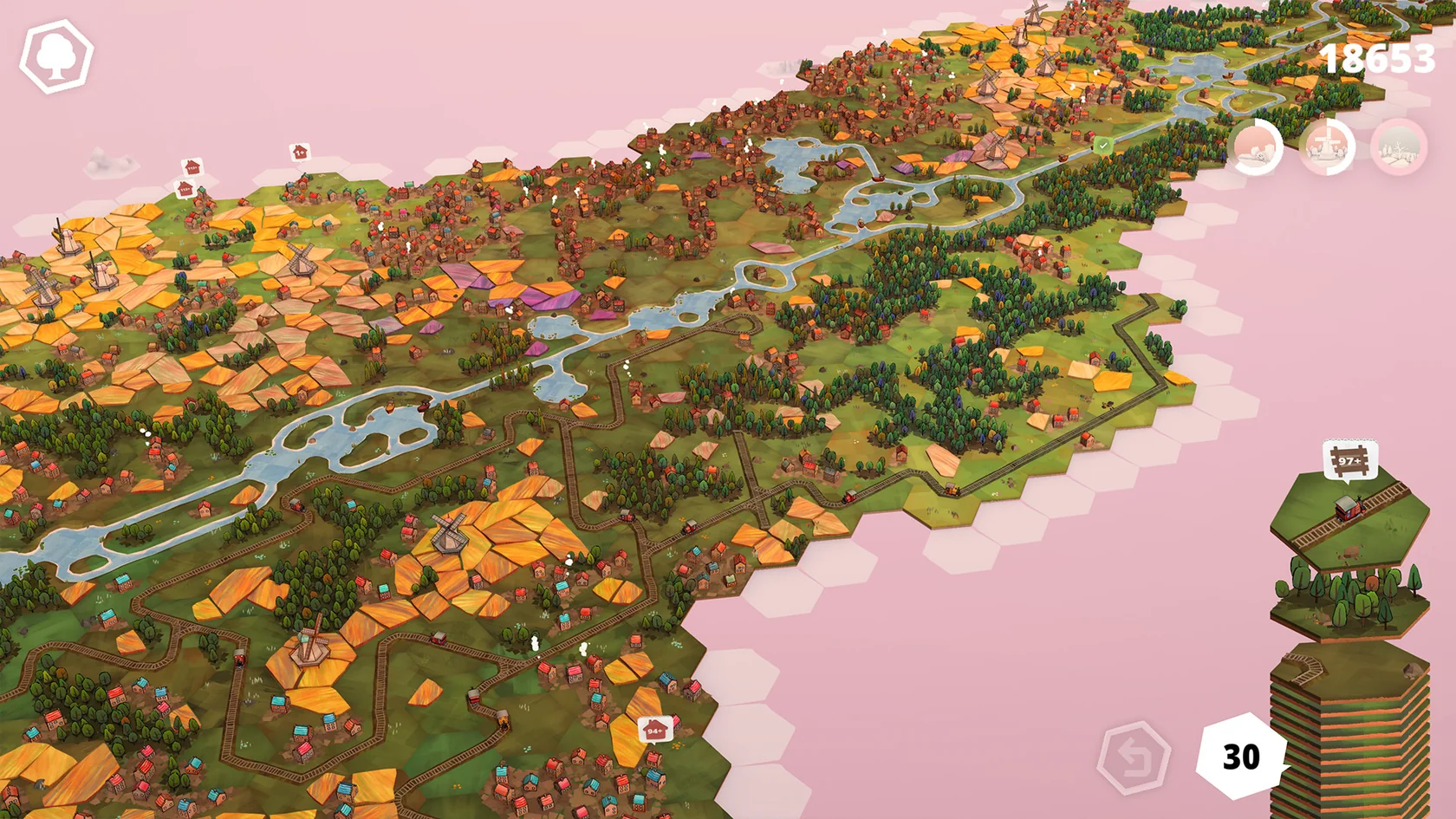
A village with an awkward corner
Take a tile with a row of cottages on one side and woodland on another. Turn it towards the village and the houses join neatly, but the trees point into a narrow gap. Turn it once more and the trees meet their neighbours while the cottages sit alone. Much of Dorfromantik happens in that pause before you commit. The countryside looks spontaneous precisely because you remember the small compromises it took to put it there.
What the windmill asks
Quest markers give otherwise interchangeable fields a history. Once a windmill needs a group of a particular size, the land around it acquires a purpose. Finishing the request adds tiles to the stack, so a good placement buys more opportunities elsewhere. A long, exposed edge leaves several places to try the next piece. Curling the village around an empty space can earn an attractive match today and leave a very particular hole for tomorrow.
Taking the scenic route
Follow a train through the finished settlement and the arithmetic briefly disappears. The little journey travels past decisions made many turns apart. That change of scale is what the game does especially well. Watching your Classic stack dwindle can bring the numbers back a little abruptly. Creative mode gives the player who chiefly remembers the railway bend, rather than the score beside it, a place to carry on shaping the view.
The verdict
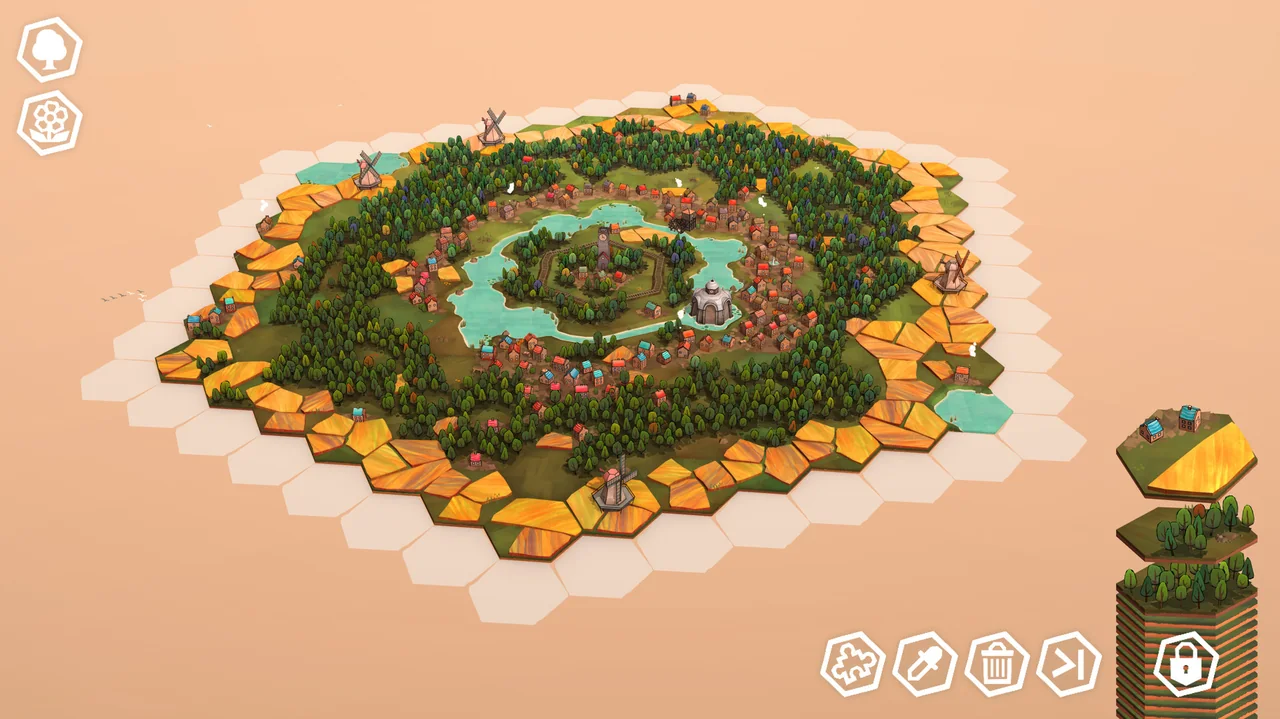
Classic mode gives the landscape just enough resistance to make a good fit feel earned. Creative mode is the better choice when you already have a picture in mind.
- Pick it for
- People who enjoy board games with a cup of tea and time to reconsider a move.
- Think twice if
- The next tile comes from a stack. A perfectly reasonable plan can wait a long time for its missing piece.
Gallery
A closer look
Game imagery · Toukana Interactive · Image source ↗